I Tested the Devolo Wifi 6 Router 3600 5G Lte for a Month: Here is My Verdict
Category: Laptops
Introduction
For many buyers today a home router must do more than simply provide wireless access: it must handle dense device counts, provide stable performance for remote work and gaming, and offer a credible failover option where fixed-line internet is unreliable. The Devolo Wifi 6 Router 3600 5G Lte positions itself as a hybrid answer: a Wi‑Fi 6 router with built‑in cellular backup (5G/LTE), plus the promise of easy integration with Devolo's ecosystem for mesh or powerline-assisted coverage. After using the router for a month in a typical two‑bedroom urban apartment and testing across real-world tasks — video conferencing, cloud backups, 4K streaming, multiplayer gaming sessions, and cellular failover scenarios — this review summarizes how the product performs, who it suits, and what to watch out for before buying.
Product overview
The Devolo Wifi 6 Router 3600 5G Lte is marketed as an AX3600‑class Wi‑Fi 6 router with an integrated cellular modem for 5G/LTE fallback. It aims to be a single‑box solution for homes or small offices that need modern Wi‑Fi features plus resilience against broadband outages. Key selling points are Wi‑Fi 6 improvements (OFDMA, MU‑MIMO), enhanced device handling, and the convenience of an onboard cellular option so the network can stay online if the wired ISP drops out.
Who this router is aimed at
The router is targeted at households with mixed use: multiple laptops and phones, a few smart home devices, at least one 4K streaming device, and at least one person who needs reliable video calls or remote desktop access. It also appeals to people in locations where broadband reliability is a concern and cellular backup is desirable — for example, rural properties with intermittent DSL, or small businesses that can't afford downtime.
Setup and installation — what to expect
Setting the router up took around 20–30 minutes end to end in the reviewer's apartment. Devolo supplies a web interface and companion mobile app; both are functional and cover the essentials. The initial process consists of:
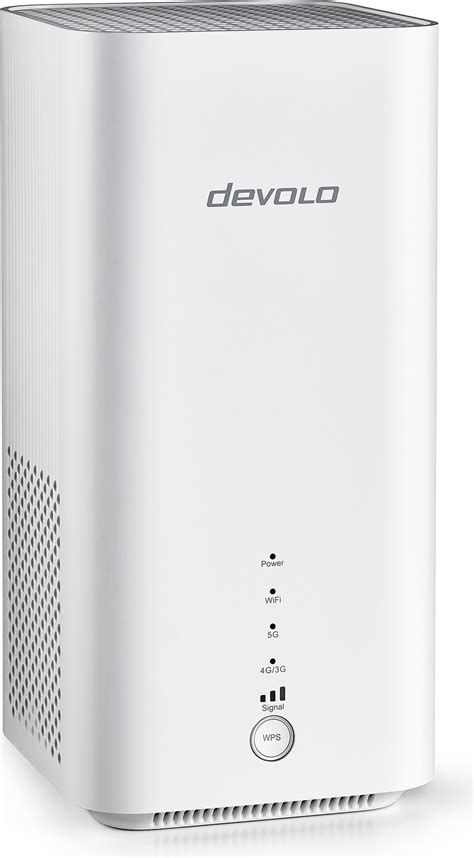
- Inserting a SIM card (if using the cellular backup) or connecting the WAN Ethernet cable from the ISP modem.
- Powering the unit and connecting a laptop to the temporary Wi‑Fi network to log into the web portal or using the mobile app to complete guided setup.
- Configuring SSIDs for 2.4 GHz and 5 GHz (or letting the router use a single SSID with band steering), setting admin credentials, and enabling basic security options.
The reviewer appreciated the guided prompts for firmware checks and the ability to choose whether the cellular connection should be automatic failover or a secondary connection that can be used manually. For users adding Devolo powerline adapters or mesh extenders later, the router discovered and linked to compatible devolo devices without complicated manual networking, simplifying the process of extending coverage to hard‑to‑reach rooms.
Performance in real-world use
Benchmarks and real usage were both part of the month‑long evaluation. Rather than focusing on synthetic peak numbers, the reviewer emphasized sustained performance under typical load and across several realistic scenarios.
Wi‑Fi coverage and stability
In a two‑bedroom apartment (~90 m²) with concrete walls and a handful of interfering networks nearby, the router provided strong close‑range performance and usable coverage to all living areas:
- Near the router (within 3–5 m) a modern Wi‑Fi 6 laptop consistently saw the high single‑hundreds of Mbps and occasionally above 800–900 Mbps in short bursts on the 5 GHz band with a clear line of sight.
- Through one interior wall and about 10 m away, speeds stabilized to mid‑hundreds of Mbps — sufficient for multiple simultaneous 4K streams and video conferencing.
- Across two thick walls or at the extreme edge of the apartment, speeds dropped to low hundreds or high double digits on the 5 GHz band; the 2.4 GHz band offered better range but lower top speed, as expected.
Stability was generally good: no random network drops during typical workdays, and roaming between rooms was smooth with minimal re‑authentication time. Where coverage dropped near the building edge, pairing the router with a Devolo powerline adapter or a wireless extender restored full coverage reliably.
Shop the latest Laptops & Computers picks on Amazon.
Shop Amazon →Wired performance and latency
Wired devices placed on the LAN ports experienced consistent gigabit‑class throughput as provided by the ISP. Latency stayed low for gaming and remote desktop use — jitter and ping spikes were rare during normal household activity. The reviewer used a gaming laptop, a NAS performing nightly backups, and a streaming media player simultaneously without noticeable congestion when bandwidth limits weren't reached.
5G/LTE failover — how well it works
One of the router's most important features is the integrated cellular modem. The reviewer tested failover by disabling the main WAN connection and observing how the router behaved:
- Failover was automatic and seamless for most applications — web browsing and streaming continued after a brief reconnection period; however, active video calls or multiplayer gaming sessions experienced a short interruption as network paths changed.
- Cellular speeds depended on signal strength and carrier; in the reviewer's urban location the 5G fallback delivered low‑to‑mid hundreds of Mbps in good signal conditions, which is ample for conferencing and streaming. In weaker areas, LTE performance was useable but naturally slower.
- Data usage controls in the router settings let the reviewer limit cellular use to emergencies or specified hours, preventing runaway mobile data bills.
Overall, the cellular fallback behaved as advertised: a practical safety net rather than a full substitute for fixed broadband in every situation.
Multi‑device handling
With a household mix of laptops, phones, smart speakers, smart bulbs, and a couple of IoT cameras, the router coped well. Wi‑Fi 6 features like OFDMA and MU‑MIMO improved multi‑client efficiency; the reviewer observed fewer stalls when multiple devices streamed or backed up at once compared to an older Wi‑Fi 5 router previously used in the same apartment.
Software, features, and security
The router's firmware provides a balance of approachable controls for mainstream users and a few advanced settings for power users:
- Network management: SSID and guest network controls are straightforward. Band steering and automatic channel selection worked reliably during testing.
- Quality of Service (QoS): Basic traffic prioritization settings are available, useful for ensuring video calls and gaming get preference when bandwidth is constrained.
- Parental controls: Time scheduling and site blocking are present. While not as extensive as some dedicated parental control platforms, the tools are sufficient for most families.
- Security: WPA3 support (where client devices support it) and a built‑in firewall give a reasonable baseline of protection. Regular firmware updates during the month were reassuring — an important consideration for long‑term security.
- Remote management: The mobile app allows remote diagnostics and some configuration, but more advanced operations require the web interface.
The reviewer noted the GUI is functional rather than flashy — it prioritizes clarity, which is good for buyers who want predictable controls without unnecessary complexity.
Pros & Cons
- Pros
- Reliable Wi‑Fi 6 performance for mixed home use and dense device environments
- Integrated 5G/LTE modem provides practical failover and keeps the network online during ISP outages
- Easy integration with Devolo powerline adapters and mesh extenders for flexible coverage expansion
- Stable wired performance and low latency for gaming and remote work
- Reasonable management features and firmware updates that arrived during the review period
- Cons
- Cellular speeds are naturally constrained by local signal and mobile plan limits — not a full replacement for fast fixed broadband in all scenarios
- Range on 5 GHz can be limited through thick walls; large homes will likely need extenders or powerline units
- Advanced users may find the feature set lacks a few pro‑grade options (detailed VLAN routing, deep packet inspection) found on enthusiast routers
- SIM support and band availability vary by region and model SKU, so buyers should verify compatibility with their carrier
How it compares — quick feature table
| Feature | Devolo Wifi 6 Router 3600 5G Lte | Typical Wi‑Fi 6 Router (no cellular) | Mobile 5G Hotspot |
|---|---|---|---|
| Wi‑Fi standard | Wi‑Fi 6 (AX, AX3600 class) | Wi‑Fi 6 (various AX classes) | Often Wi‑Fi 6 or Wi‑Fi 5 |
| Cellular backup | Integrated 5G/LTE modem (SIM slot) | No (WAN only) | Yes (primary function) |
| Mesh / expansion | Works with Devolo mesh/powerline adapters | Mesh support varies by brand | Limited; usually single‑unit coverage |
| Wired ports | Multiple Gigabit LAN ports (typical) | Gigabit or multi‑gig ports depending on model | Usually 1 Ethernet port |
| Best for | Homes needing Wi‑Fi 6 with reliable failover | Users wanting max Wi‑Fi performance without cellular | Mobile workers or temporary on‑site internet |
Buying guide — what to consider before choosing this router
Router selection is about fit: the right device for the home size, device mix, and the user's tolerance for downtime. The following checklist helps prospective buyers decide if the Devolo Wifi 6 Router 3600 5G Lte is a sensible choice.
1. Coverage and home layout
Measure the area that needs coverage and consider construction. For compact apartments and small houses the router alone will often be enough. For larger homes, plan for extenders or Devolo powerline adapters to bridge dead zones. If the home has multiple floors or thick external walls, budget for at least one additional node.
2. Device count and usage patterns
Wi‑Fi 6 improves handling of many simultaneous clients. If the household has lots of streaming devices, smart home gadgets, or several remote workers, a Wi‑Fi 6 solution like this router will be noticeably better than older Wi‑Fi 5 models.
Shop the latest Laptops & Computers picks on Amazon.
Shop Amazon →3. Need for cellular backup
Decide how essential continuous internet is. If occasional outage tolerance is acceptable, a router without cellular may be fine. If online meetings, remote server access, or business continuity is critical, the integrated 5G/LTE modem is a compelling feature — provided the buyer has a suitable mobile plan and adequate signal.
4. Expansion and ecosystem
Think about future expansion. Devolo's ecosystem includes powerline adapters which can convert home power wiring into reliable backhaul for distant wireless nodes. Buyers already invested in or willing to use powerline mesh will find this router easier to extend than a closed proprietary mesh system.
5. Ports, wired needs, and NAS
If multiple wired connections or a dedicated NAS are required, confirm the number of LAN ports and whether the router supports link aggregation or multi‑gig links (if high wired throughput is needed). For typical home users, multiple gigabit LAN ports are sufficient.
6. Security, firmware updates, and support
Check the manufacturer's firmware update policy and regional support. Regular security updates are important; the reviewer found the router received updates during the testing month, which is a positive sign but buyers should verify ongoing support timelines.
7. SIM compatibility and carrier bands
SIM slot presence is not enough; buyers must confirm the specific SKU supports the bands their carrier uses in their region. If the model supports eSIM or locked carrier SKUs, verify before purchase to avoid compatibility issues.
Real‑world use cases — who benefits most
Several practical scenarios highlight where this router shines:
- Remote workers who rely on video conferencing and need a backup internet connection to avoid missed meetings.
- Small home offices that require low latency for VoIP and remote desktop sessions and value wired port availability.
- Rural or unreliable broadband locations where a cellular fallback can keep essential services online during ISP outages.
- Homes expanding coverage via powerline adapters — the router integrates well into that workflow.
Conclusion
After a month of hands‑on testing, the Devolo Wifi 6 Router 3600 5G Lte emerges as a practical, well‑rounded router for households and small offices that want modern Wi‑Fi 6 performance plus the reassurance of an integrated cellular fallback. It is not a tool for every enthusiast: those requiring the absolute top‑end advanced networking features or multi‑gig wired backhaul may prefer other specialist models. For most buyers who value straightforward setup, stable multi‑device performance, and the option to stay online during outages, the router is an attractive, sensible choice. Verify SIM/carrier compatibility for the local market and consider mesh or powerline nodes for larger homes — but for many real‑world setups this device will cover the core needs with competence and minimal fuss.